As part of the joint cooperation between Azerbaijan State University of Economics (UNEC) and the Chamber of Auditors of the Republic of Azerbaijan, with the support of the UNEC Career Center, a seminar on “Accounting and Audit in the Context of Artificial Intelligence and Digitalization” was held for students at the Faculty of Finance and Accounting in connection with the implementation of the priority area “Improving Talent and Skills in the Field of Artificial Intelligence” of the Indicator Table of the “Artificial Intelligence Strategy of the Republic of Azerbaijan for 2025-2028”.
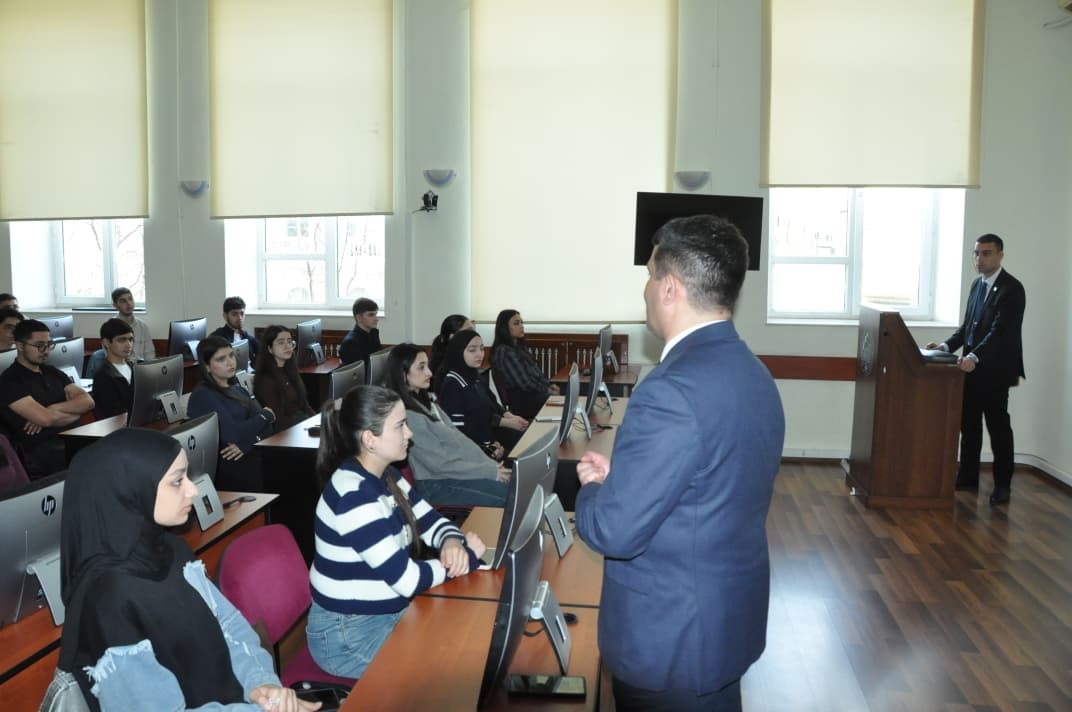
The event was opened with introductory remarks by Hafis Hajiyev, Associate Professor and Dean of the Faculty of Finance and Accounting, who noted that the impact of artificial intelligence technologies and digitalization processes on the fields of accounting and audit is rapidly expanding in the modern era. He emphasized that these changes necessitate the development of new knowledge and skills among future specialists. The Dean highlighted the importance of students being open to innovative approaches, developing their professional competencies in the digital environment, and acquiring the ability to effectively use modern technologies based on international experience. It was noted that awareness-raising events held in this area play an important role in helping students integrate into the labor market with better preparation.
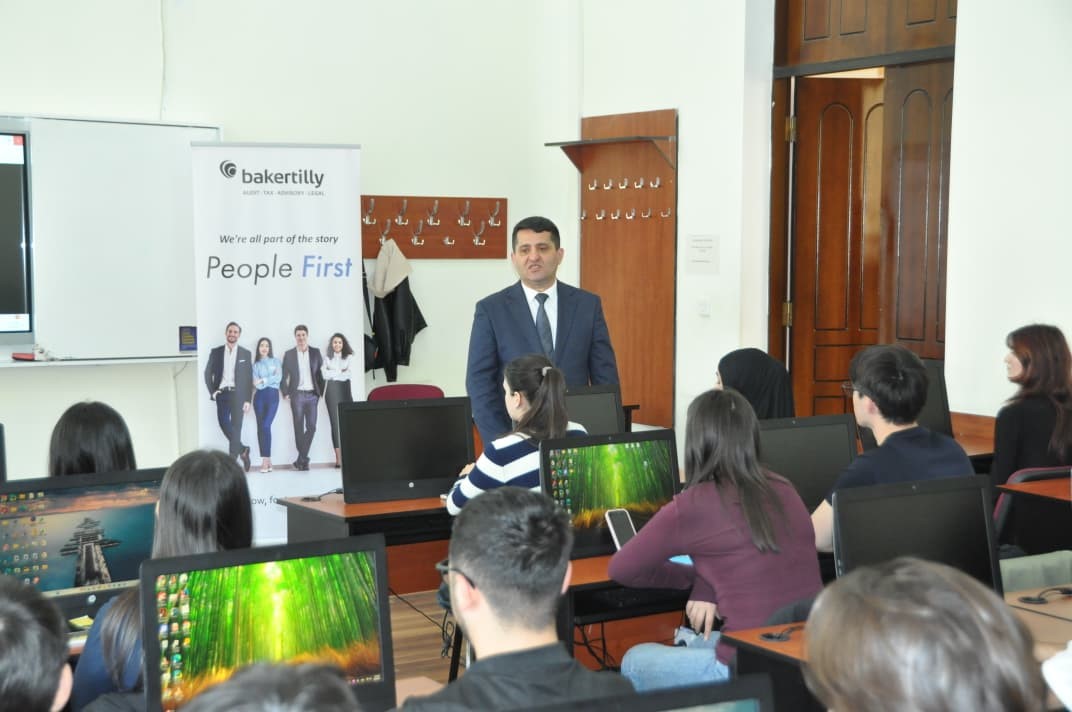
Goshgar Ahmadov, Deputy Chairman of the Chamber of Auditors of the Republic of Azerbaijan for Digitalization, Artificial Intelligence and Cybersecurity, then delivered an extensive presentation. The presentation emphasized that digitalization and artificial intelligence technologies play an important role in increasing transparency in accounting and audit, improving the quality of financial reporting, and enabling more accurate and timely monitoring of transactions. It was noted that the use of data analytics, automated control mechanisms and digital audit trails has already become a necessity in modern audit systems.
In his speech, Goshgar Ahmadov also noted that artificial intelligence-based systems enable the minimization of errors arising from the human factor and corruption risks, more timely identification of risks, and the strengthening of control mechanisms. At the same time, the strategic importance of cybersecurity in terms of protecting financial information and ensuring the reliability of audit processes was emphasized.
The presentation placed particular emphasis on the importance of organizing training for accounting and audit professionals in line with new challenges in the context of digital transformation. The importance of educational institutions implementing modern teaching models aimed at developing practical skills in artificial intelligence, big data, automated audit systems and digital platforms was highlighted. At the same time, it was proposed to expand cooperation between universities and professional organizations, increase practical training programs linked to the real sector, and establish digital simulation environments.
The event also featured extensive discussions on strengthening integration among public administration, the higher education system and the industrial sector, promoting innovation-oriented development, and improving knowledge transfer mechanisms. With the participation of local and international experts, scientifically grounded approaches and practical proposals concerning contemporary economic challenges were presented at the conference.
During the discussions, it was noted that ensuring sustainable socio-economic development requires an effective balance between the research potential of universities, the strategic regulatory role of the state, and the innovation needs of industry.
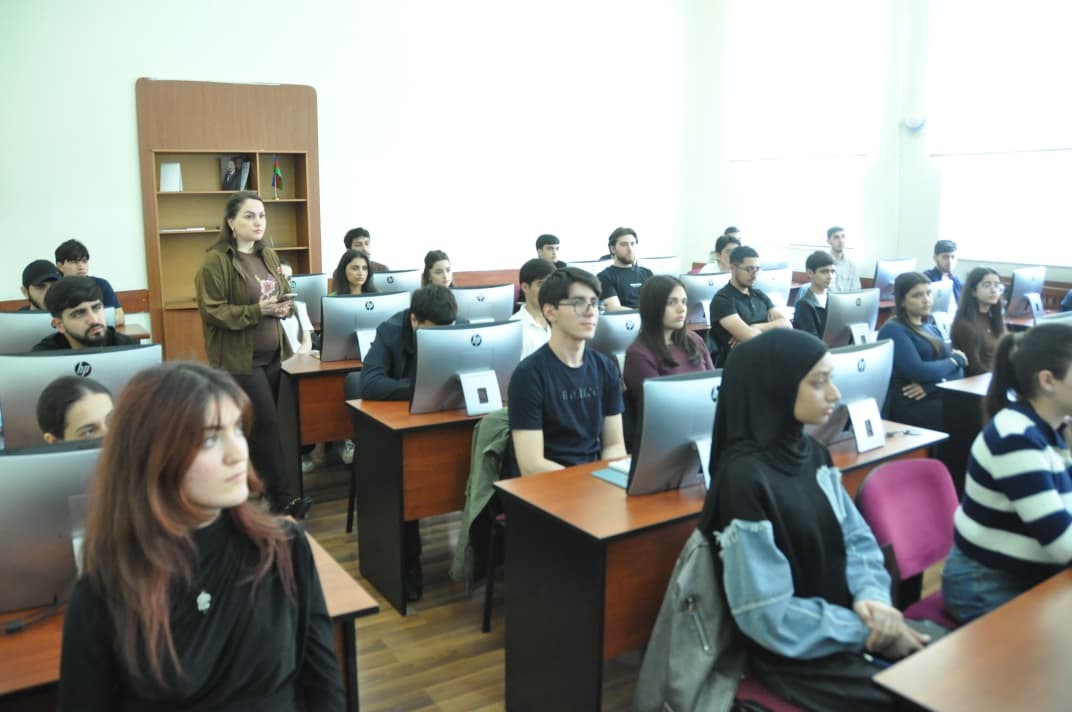
At the end of the event, questions from the students were answered and a broad exchange of views on the topic took place.

Qalareya