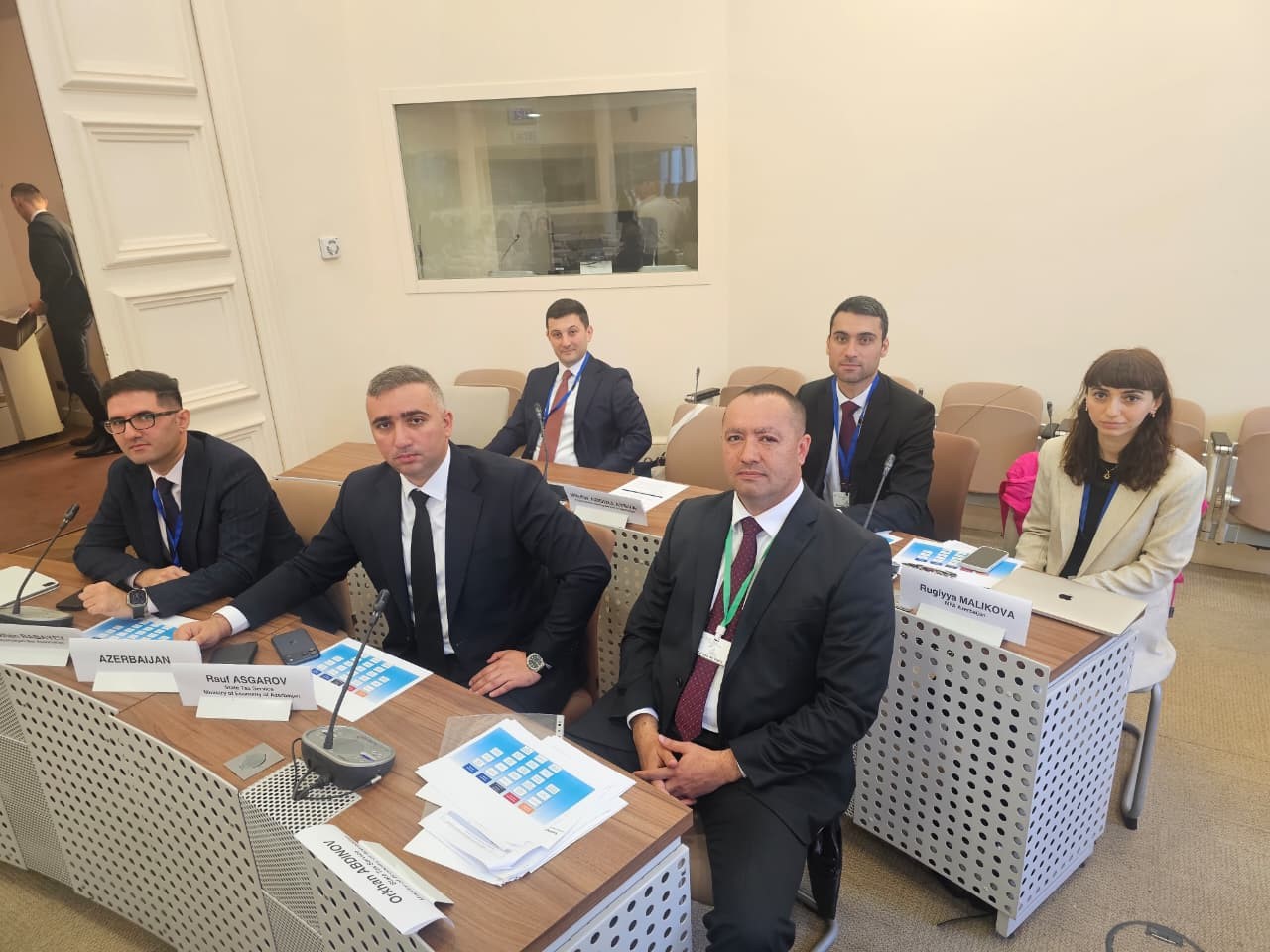
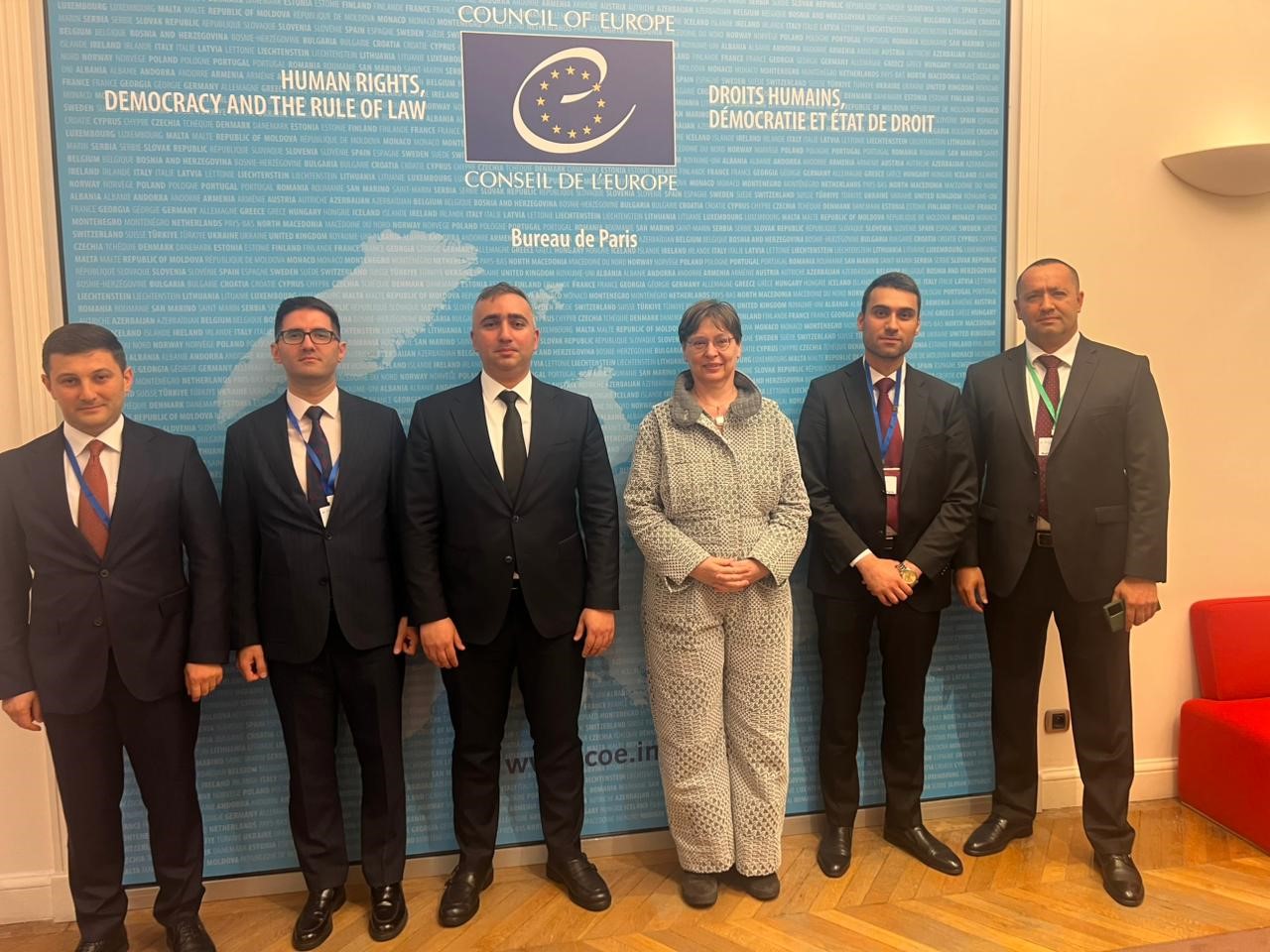
On 21–22 May 2026, a regional seminar entitled “Designated Non-Financial Businesses and Professions: Building Effective AML/FT Supervisory Systems and Controls” was held in Paris, France, at the Council of Europe’s Paris Office.
The seminar was attended by representatives of relevant state authorities, financial monitoring bodies, supervisory authorities and self-regulatory organizations from Azerbaijan, Armenia, Moldova and Ukraine.
The Azerbaijani delegation included representatives of the Chamber of Auditors Goshgar Ahmadov and Saftar Valizade, representative of the Ministry of Foreign Affairs of the Republic of Azerbaijan Ruqiyya Malikova, representatives of the State Tax Service under the Ministry of Economy of the Republic of Azerbaijan Orkhan Abdinov and Rauf Asgarov, representative of the Bar Association of the Republic of Azerbaijan Orkhan Babayev, and representative of the Financial Monitoring Service of the Republic of Azerbaijan Nilufar Abdullayeva.
Within the framework of the seminar, representatives of the Republic of Azerbaijan delivered a presentation on AML/FT supervision in the non-financial professions and business sector in the country, risk-based supervisory mechanisms and ongoing institutional reforms.
The seminar aimed to strengthen institutional mechanisms for combating economic crime in the Eastern Partnership region, particularly to enhance institutional control mechanisms for combating money laundering and terrorist financing (AML/FT).
The main objective of the seminar was to improve AML/FT supervisory mechanisms for designated non-financial businesses and professions (DNFBPs), implement risk-based supervisory approaches, strengthen institutional preparedness in line with international standards, and enhance the practical knowledge and skills of participating countries in preparation for MONEYVAL/FATF assessments.
The FATF’s new assessment methodology, particularly the new approaches under “Immediate Outcome 4” (IO.4), was extensively discussed during the seminar. Experts noted that under the new methodology applied by the FATF since 2022, the effectiveness of supervision in the DNFBP sector is assessed separately and against stricter criteria. In this regard, strengthening supervision in the non-financial sector, properly assessing risks and applying effective sanctions mechanisms are of particular importance.
During the seminar, the results of MONEYVAL assessments were analyzed in detail, particularly existing deficiencies in the DNFBP sector in the Eastern Partnership countries, weak implementation of risk-based supervisory mechanisms, low levels of suspicious transaction reporting, and the institutional capacities of supervisory authorities.
The sessions addressed the requirements applicable under FATF Recommendations 22, 23, 28 and 35, as well as the establishment of a risk-based supervisory model, integration of the results of the National Risk Assessment (NRA) into supervisory planning, and identification of risk profiles by sector.
Experts emphasized the importance of the following areas in applying a risk-based approach in the DNFBP sector:
Practical presentations on the development of supervisory strategies and supervisory plans were delivered during the seminar. Participants were presented with practical methodologies for establishing a register of supervised entities, categorizing them by risk, developing annual supervisory plans, and effectively managing supervisory resources.
During the practical exercises, sample supervisory plans for a hypothetical DNFBP sector were developed and analyzed jointly with the participants. The event participants exchanged views on the development of risk-based inspection plans, prioritization of inspections, and measurement of the results of supervisory activities.
The seminar also included extensive discussions on supervisory mechanisms for off-site monitoring and on-site inspections. During the sessions, particular attention was paid to the following issues:
In addition, the sessions on administrative sanctions and enforcement mechanisms provided an extensive analysis of measures applied for AML/FT violations, the importance of proportionate and dissuasive sanctions, administrative and criminal liability measures, documentation of violations, and publication of sanctions.
Experts noted that one of the areas receiving the greatest attention in MONEYVAL and FATF assessments is the existence of effective and dissuasive sanctions mechanisms. In this regard, the practices of the participating countries were discussed comparatively.
Within the framework of the seminar, the Azerbaijani delegation delivered a presentation on the institutional reforms implemented in the country in the DNFBP sector, measures taken to strengthen AML/FT supervision, and risk-based approaches.
The presentation provided information on the following areas:
The presentation by the Azerbaijani representatives was met with interest by the participants, followed by an exchange of experience with representatives of other countries.
The seminar also featured presentations on emerging risk areas such as virtual assets and cryptocurrency transactions, concealment of beneficial ownership, nominal ownership structures, proliferation financing risks, and mechanisms for sanctions evasion.
Experts noted that, in the modern environment, illicit financial transactions carried out through virtual assets and complex ownership structures create significant risks for the DNFBP sector. In this regard, strengthening the analytical capabilities of supervisory authorities, implementing digital supervisory tools, and expanding international information exchange are of particular importance.
Another important area of the seminar was the application of information technologies and artificial intelligence solutions in AML/FT supervision. The sessions provided detailed information on SupTech solutions, data processing and analysis systems, automated identification of risk indicators, and artificial intelligence-based monitoring tools.
Participants noted that the application of modern technologies is important for increasing the effectiveness of the supervisory process, making more efficient use of resources, and identifying risks at an early stage.
The seminar served as an important platform for exchanging experience among the participating countries, expanding regional cooperation, and increasing practical knowledge of the FATF’s new methodology.
The Azerbaijani representatives actively participated in the discussions, practical sessions and exchange of experience held within the framework of the event, and became familiar with international practices in improving AML/FT supervision in the DNFBP sector.
It was noted that the knowledge and experience gained during the event are of significant importance for their application in future activities, further strengthening cooperation among relevant authorities, and developing supervisory mechanisms in line with international standards.

Qalareya